
Henry Weston – Herefordshire Cider Maker

Henry Weston came from Upton Bishop in Herefordshire to The Bounds in Much Marcle, in 1878, as a tenant farmer of the Homme House Estate. The 100-acre farm did not provide enough income in the first year to support young Henry and his wife Emily, so Henry, encouraged by C.W. Radcliffe Cooke who lived at nearby Hellens, used the fruit from the Bounds orchards and the horse-powered stone mill and hand press outside the farmhouse to press his first cider and perry.
The cider sold well through merchants, encouraging Henry to invest in a steam engine to drive a scratter mill with stone rollers that crushed the apples with less labour than the horse mill, and also provided motive power through a worm wheel to mechanical presses. It was a very dangerous machine which Henry soon hoped to replace, but it stayed in operation until the early 1900s.
Cider was supplied to the merchants in wooden barrels, and sold in cider houses as Weston’s Rough. Yet Henry was sure that he could improve on his products, selling direct to the public rather than through merchants who often preferred to buy cheap, inferior ciders. In an interview given to the Hereford Times in 1894 Henry said:
“I should not like to say that cider is adulterated when it passed through other hands, but a great many farmers just make cider in the rough, then send it to the merchants. If farmers would take the necessary precautions and make cider and perry themselves throughout, selling direct to the consumer, the latter would have more faith in it and a better trade would be the result.”
Henry’s vision was of a cider made from single varieties of fruit, milled and fermented in clean conditions, then blended to produce a clean tasting, pure product, free of infection and off flavours. To achieve this he only sourced his fruit from neighbouring farms, carefully sorting each variety of apple or perry pear into piles in his fruit yard, and removing rotten fruit by hand before it entered the mill.
The area around Much Marcle is claimed by pomologists to be the best area in Herefordshire for growing cider fruit. An entry in adjacent Dymock’s parish register notes the area’s superior cider making reputa. tion:
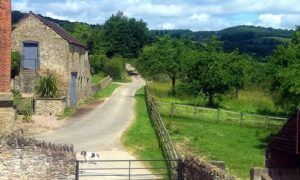
Dymock and Kempley – two of the most noted parishes in England for making of the most and best rare Vinum Dimocuum or that transcendent liquid called Red-Strake Sider not much inferior to the best of French wines.
Henry marketed his blended ciders as The Wine of the West so perhaps he was aware of the special properties of the area.
Using the steam powered mill, about four tons of fruit could be milled an hour, the pulp from which was pressed twice on two chain driven power presses. The juice flowed into slate lined tanks before being pumped uphill to the wooden fermenting vats. Fermentation was by ambient temperature, relying on the wild yeasts present on the fruit skins, so could take up to three months. Once the cider had stopped fermenting it was rough filtered through linen bags into the conditioning vats in a cellar carved out of the local stone, which kept the cider extremely cool. The cider was then blended before being filtered again through an Invicta filtering machine and filled into steam-cleaned wooden casks. This ensured the cider in the cask remained clear and of the highest quality.
Will Smith, a friend of Henry, joined the company as its first salesman, promoting Westons’ ciders and perries in Birmingham. With Will’s assistance the new Westons’ blends soon took off and orders started to roll in from cider houses and private individuals as far away as Scotland.
In 1885 a railway station opened at Dymock, only two miles from the Westons’ mill, with direct lines into Newent, Ledbury and Gloucester. The station was kept busy with horse-drawn wagons bringing Weston’s cider from the mills at Much Marcle for delivery by rail, almost 75% of the company’s products being sent to customers this way. Teams of horses and their drivers parked outside the Crown Inn at Dymock while both men and horses refreshed themselves.
So popular had Westons’ ciders become that C.W. Radcliffe Cooke had Westons appointed as cider and perry supplies to the House of Commons; a price list of 1916 shows that the public could purchase from Westons ‘Cider or Perry in a cask or bottle, as supplied to the House of Commons’. With production at the mill growing, Henry envisaged replacing the steam milling equipment with the latest hydraulic system.
First World War intervened. Henry died in 1917 and failed to see his dream fulfilled.
Emily had borne Henry nine children—five girls and four boys. Hubert, Leonard and Stafford succeeded their father to become the company’s new directors. Hubert took on the farm, including the famous Bounds herd of pedigree Hereford cattle, Stafford took on the cider mill, including the blending of the ciders and perries, and Leonard developed the company’s transport and distribution networks. The company bought its first lorry in 1919, a 3ton Guy which was driven by Harry Probert and used for bulk delivenes to Birmingham and Bristol.
In 1920 the steam mill was replaced by the Naylor mill and hydraulic presses, powered by a paraffin internal combustion engine that also ran a generator providing clectric light. The Westons’ mill was the talk of the country and visitors came from near and far to see it. In 1922 Westons purchased The Bounds farm and two smaller adjoining farms—Nuttall Farm and Caerswall Farm—from the Homme House Estate. This gave the brothers 450 acres of land, with 20 acres under orchard, later extended to 50 acres of fruit in 1938 following a successful trial of bush orchards.
Westons’ ciders were supplied to the public either in wooden casks, or corked and wired bottles with foil capsules. In casks of 10, 12, 18, 20, 28, 30 or 36 gallons were Supreme Brand (first quality), Bounds Brand and Farm Brand, described on Westons’ promotional material as rough or medium rough cider; also Marcle Brand perry, especially recommended for customers with rheumatism. In champagne quarts or pints were sold: Sparkling Marcle Cider, Gold Seal or Red Seal (old dry matures), Marcle Specialite Perry, Green Seal or Black Seal and Apple Brand—full bodied ciders—were bottled in quarts, pints, half pints or nips—a third of a pint,
Leonard Weston was introduced by a friend to new bottles with elaborate screw tops being used to package beer. He saw the potential of the easy to open and fill flagon for cider and persuaded his brothers to adopt the packaging for quarts and pint bottles. Westons were one of the first cider makers in the country to use the new flagons, which proved a great success with both the licensed trade and the public. The popularity of the flagon led to an increase in the workforce to between 60 and 70 permanent staff, plus 30 to 40 casual workers during pressing time. A regular sight at agricultural shows was a Westons’ promotional lorry with its body constructed in the shape of a flagon.
The old Guy lorry, bought by Leonard in 1919, had by 1925 developed into a fleet of vehicles. To service them a public garage was built on the Marcle crossroads and Harry Probert, the driver of the first Westons’ lorry, was put in charge of tlie garage, which was until recently still run by his descendants. In 1926 leonard organised the first local bus service to take children and shoppers from Much Marcle to Ledbury and other towns, and to provide transport for the mill workers, 15 per cent of whom lived in Newent, Ross, Dymock and Kempley due to housing shortages in Much Marcle.
In 1929 Hubert died, but the brothers continued to manage the firm, Stafford looking after the farm and cattle and Leonard the garage, with both taking a combined interest in the cider and perry making. In 1932 Hubert’s young son, Norman, joined the firm to work in the cider mills and was quickly dubbed The Foreman by his work colleagues, partly because of his inexperience and partly because of his stature.
In 1930 Westons opened their first (and only) cider house on the Harrow Road in London. Selling only Westons’ products, it was furnished in Victorian style with barrels as tables, which had a shelf set into them where you could rest your pint. The cider house became a great success and was so renowned it was mentioned in London guide books. In 1970 the cider house had to make way for a road improvement scheme, so was closed and demolished, and distribution of Westons’ products for the London area were moved to a warehouse in Clapham, south London. It has often been regretted by the firm that the Harrow Road cider house was the only licensed premises it ever owned and controlled. Yet due to plenty of publicity for Westons’ cider, sales built up to include. contracts to all the main breweries in Birmingham and the west midlands, including Hereford, Ross and Stroud, along with direct trade to privately owned houses and individuals in the West Country, Wales, Oxfordshire and London.
In 1952 Westons added quality control laboratories to the mill at Much Marcle. This enabled the company to measure the quality of its cider with scientific accuracy. In 1956 John Howes joined Westons from W.M. Evans in Hereford, as chemist with responsibility for the quality control of all Westons cider and perry production. John’s job involved analysing and tasting samples from the vats to select which to blend into the various Westons’ brands, depending on their individual characteristics and tastes, sweet or dry, stronger or weaker, farmhouse ‘rough’ or superior ‘vintage’ and carbonated ciders, also if necessary controlling the addition of sugars to create medium and sweet blends. The process of fermentation was also improved, using a stable yeast cultured from the lees in the best vats, to ensure clean and even fermentation without loss of the desirable flavours, characteristics and quality of the finished product.
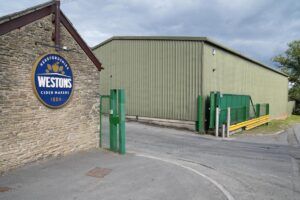
Other than scientific developments in the lab, the making of cider at Westons had changed little since 1920. The cider mill is surrounded by orchards which, like the buildings, fruit yard, vat houses and bottling hall have been added as needed, creating a disorientating jumble of buildings at different levels due to the hill on which the Bounds stands. At the top of the slope is the fruit yard, then the fruit trough cut into the ground so that fruit can be pushed straight in. Farmers delivering fruit pile the apples (or pears) up in great tumps. The piles are then shovelled by hand, tractor or JCB into a channel where water from an artificial lake floats them into the main trough, via an underground canal. Between the fruit trough and the milling and pressing rooms are the fermenters, then the labs, then down seven steps the milling and pressing room.
One employee, who worked at the mill in the 1960s, vividly remembers working in the pressing room:
The apples were floated in on water, then washed on a conveyor which elevated them to the floor above for milling.
The juice from the presses then had to be pumped back up to the fermenting vats where it ferments for up to three months before being pumped through to the conditioning vats in the cellars below the fermenting, mill and press rooms.
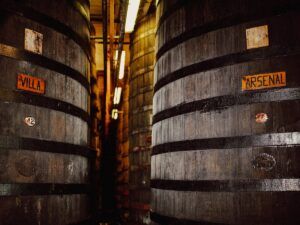 Westons have 72 oak vats holding between 1,200 gallons and 42,000 gallons each. All the vats and fermenters have names, the earliest vats were called after the founding family, then composers, cider making counties and Leonard Weston’s favourite football teams. For several years Leonard was chairman of Hereford United Football Club and was proud when he was made president of the Southern League Football Association. Leonard named one vat Hereford and the one next to it Wembley. Vat 52 was christened Queen Elizabeth to mark the 1952 coronation. The three biggest vats, Pip, Squeak and Wilfred, were rescued from a west midlands brewery. Cleaning the vats was once a risky business—a worker remembers:
I got to clean the wooden vats with a broom and hose. It was pretty primitive, the vats were not tested for carbon dioxide, you guessed if it was safe to go into the vat. Once I nearly went unconscious because the gas wasn’t properly vented out – I felt dizzy and sleepy and had to get out quick. There was no safety harness or rope, just a ladder, dangerous when you think about it now, but we didn’t think about it then.
Through the cellars housing the conditioning vats is the bottling hall, filter room and store room. Whilst another level down is the warehouse and Bounds farmhouse, annexed to which, in a converted first floor feed store, are the company’s small offices. The original stone mill on which Henry Weston made his first cider still stands outside the farmhouse in the gardens. The farm stables and cow sheds are grouped together round the farmyard another level down and have now been made into offices, a museum, shop and restaurant.
In 1961 Norman Weston was appointed to the Board and made managing director. The marketing director at that time was Major William Jaine, who had joined the company as a sales representative after his retirement from the regular army in 1954. In 1971 Leonard and Stafford died within a few months of each other, their places on thé Board being filled by Mrs, Frances Weston, widow of Stafford, and Mrs, Doris Weston, widow of Leonard. In 1972 Norman’s son, Henry Weston, joined the family firm, followed by his sister, Helen, who succeeded to the role of Managing Director on her father, Norman’s, retirement Henrv and Helen’s brother, Timothy, also joined the firm, whilst Michael Rott took over from Major Jaine as marketing director in 1980, the year of Westons’ centenary. The current marketing director is Roger Jackson. Norman Weston still takes an active role in the company as its Chairman, driving his fork lift truck around the goods yard and warehouse and the staff sull affectionately refer to him as The Foreman.
By 1985 Westons’ range had developed. Bounds Brand (sweet, medium and dry) was still the premium cider. Country (medium dry) had been added to Farm Brand as a draught cider, along with Special Vintage, made from selected vintage cider apples and matured for over a vear in oak vats. A special cider, Vat 53, was also on offer, but described as difficult to find in the three counties. Champagne style ciders had been discontinued along with Apple Brand. Perry was available as Black or Green Seal, matured in oak vats for at least two years. Draught ciders and perries were now presented in polycasks of five or eleven gallons, or in glass flagons and bottles. Westons had produced a keg cider, Stowford Press, for Camerons Brewery in Hartlepool, which was sold as a house cider. It was sent in a tanker of 3,000 gallons at a time to Hartlepool and kegged by the brewery. The name was thought up by a PR whiz kid who was visiting the Cotswolds, combined the names of two villages, Stow on the Wold and Burford, then added ‘Press’. When the Camerons Brewery was sold, Westons bought the name and continued to make the brand, putting in a kegging line at The Bounds.
The demand for Westons’ ciders and perries, along with projected growth for the firm in the future, meant that the company needed to produce more cider, more economically and faster. So, in 1998, under the direction of Helen Weston, the company invested £500,000, over two years. The mill and presses were replaced, and automatic fruit handling introduced, Three stainless steel holding tanks for finished cider were installed, being named by Norman Weston’s grandchildren: Eeyore, Piglet and Tigger! Westons have retained the fermentation and conditioning of cider in wooden vats, as well as sourcing home grown fruit from their own orchards and over 200 neighbouring farms, which they believe gives their ciders and perries their special character and appeal. A new bottling line was also installed. Having moved from wooden crates to cardboard boxes to please the supermarkets, Westons now ship their products in pad and shrink wrap which creates less waste.
Improvements have also been made to visitor facilities on site, The shed, redundant since the disposal of the Bounds herd of pedi Cow Hereford cattle, has been converted into the Scrumpy House Restaurant which opened in the winter of 1998.
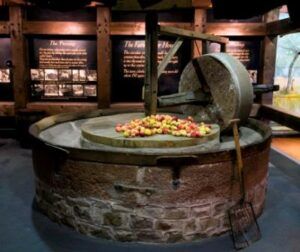
In 2000 the old stables adjoining the farmyard were developed into a museum containing exhibits of rural and cider making equipment, including one of the original Naylor Hydrauti, presses used by Westons for over 80 years, plus a collection of Over 709 cider and perry bottles from around the U.K.
In 2002 Westons landscaped the gardens at Bounds and developed an education room for Schools plus a new shop area offering tasting and sales of Westons products. The fifth generation of Westons, Guy Lawrence, son of Helen, joining the firm in 1999 and is keen to keep the family tradition of making quality ciders and perries alive for the future. Like his grandfather, Norman, before him, he is learning all aspects of the business from orcharding to final product, to ensure the Westons’ tradition is in good hands. Keith Knight, of Knights Cider Company in Storridge on the edge of the Malvern Hills, did not start making cider until 1979.
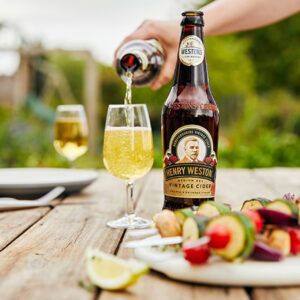 Around 1992 we stopped using the old bed press which took five men to operate and switched to a French Spechime continuous screw press which only needs two men to operate it. It satisfied our need to press more fruit at the time, but as the orchards matured | always worried that the press would break down with no backup. So we made the large investment in a belt press, capable of pressing 810 tons of pulp an hour with just one operator. We now have six 60,000 gallon vats, plus 100 smaller vats for fermenting and conditioning the cider.
Other medium sized cider makers have been disappearing due to market forces, or taken over by Bulmers and Matthew Clarke. Not long after we got going we started to supply Aston Manor Brewery in Birmingham with cider, which continues to this day – for many years they were our main customer. Over the last five years growth in cider has been static for small producers in the U.K. which has encouraged us to look for other markets, so we have started exporting to Europe and the USA, so expanding our customer base.
-
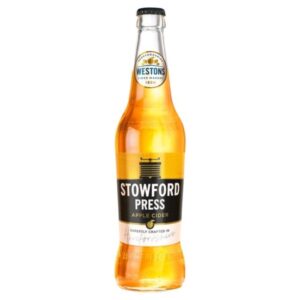 Westons Stowford Press Apple Cider 6 x 500ml Bottles£29.62
 -
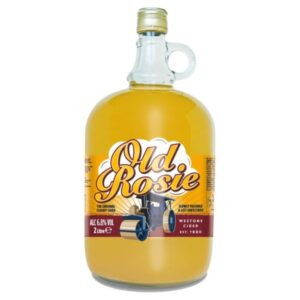 Westons Old Rosie Cloudy Cider, 3 x 2 L£29.95
 -
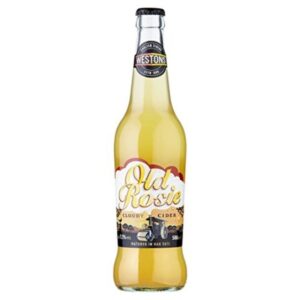 Westons Old Rosie Cloudy Scrumpy Apple Cider 6 x 500ml£22.07
 -
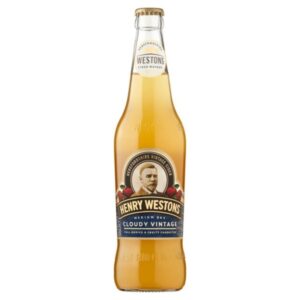 Henry Westons Cloudy Vintage Cider 8 x 500 ml£16.80
 -
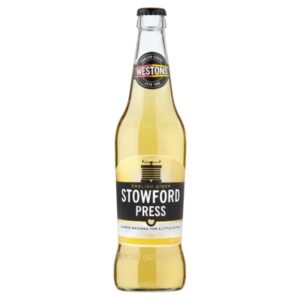 Westons Stowford Press Apple Cider 12 x 500ml Bottles£37.90
 -
 Westons Vintage Premium Cider and pork snacks gift set£63.68
 -
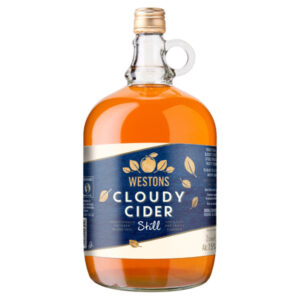 Westons Scrumpy Cloudy Cider 2L Glass Bottle (Case of 3)£23.81
 -
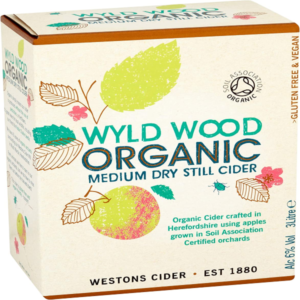 Westons Wyld Wood Organic Still Cider, 3 L (X4)£27.74
 -
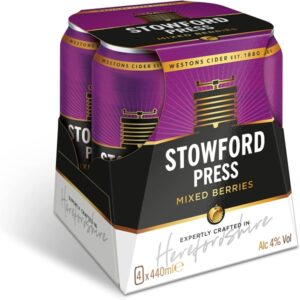 Stowford Press Mixed Berries Cider 24 x 440 ml Cans£33.00