How to Enjoy Cider – Tasting Cider

The approach to tasting cider is broadly the same as with wine: not surprisingly, given that the two drinks share many sensory properties — aroma, flavour, mouthfeel and so on. It’s worth emphasizing, though, that cider has a much more fun personality. To anthropomorphize the situation unnecessarily, at a party wine would be on the sofa in the corner, checking on Linked In to see who’s viewed them today; cider would be sporting face paint and performing an epic air guitar to “Freebird”.
Another difference is that cider is swallowed rather than spat out, because you need to detect the presence of those rich tannins that only hit at the very back of the throat and on the swallow. How can you tell whether a cider has a lingering finish and after taste if you haven’t achieved a full taste in the first place?
What cider and wine do have in common is the importance of fruit. It is very hard for a single apple variety to achieve all of the properties that are sought after in a cider; therefore the majority of ciders tend to be a blend of different varieties. That’s not to say that single varietals don’t make fantastic and complex ciders, its just that they can be idiosyncratically lopsided on the palate.
Of course, people have personal preferences, and the great thing about cider is that it is a wonderfully diverse and versatile drink. There is a cider suited to every occasion, whether it be quenching a thirst, savouring, acting as an accompaniment to a meal or celebrating a special event.
There are three key steps to the important task of cider tasting:
COLOUR AND CLARITY
Someone far wiser than I am once said that “the first taste is with the eye’. In terms of colouration, cider ranges from pale straw to deep, ruby red. This is, of course, entirely dependent upon the apple varieties used. There are no rules or expectations with colour, but it might be wise to treat anything green or black with suspicion!
Most consumers expect a cider to be crystal-clear and this is achieved through filtration. Cider naturally has a mild haze, which, if controlied, may be appropriate to the style and shouldn’t be dismissed out of hand. A bottle-conditioned cider will have sediment at the bottom. Pour carefully to avoid disturbing this if you don’t want it in your glass.
AROMA
This is critical to presenting a quality product. Even if the cider ends up tasting fabulous, a challenging or just plain unpleasant aroma means you’re not going to want to bring the glass to your mouth. You can expect a full gamut of aromas, again depending on the apple variety used, what microflora has been involved in the fermentation and maturation, and whether any other ingredients have been added. Typical aromas from apples or pears alone can range from green apple, baked strudel and tropical fruits through to spicy, earthy and even downright funky.
A little bit of funk can go a long way, but it has to be modest and contribute to the overall structure: you don’t want the aroma to dominate. “New-world’® wine sensibilities dictate a low tolerance to these “bretty” aromas, but they are true to type of traditional West Country ciders.
FLAVOUR AND MOUTHFEEL
The key to a great cider, much as to life in general, is balance. Cider, without the assistance of wine’s alcohol levels or beer’s variety of ingredients, runs the risk of being bland or one-dimensional. But it has four heroes which, when balanced and working in unison, bring it to another level:
ACIDITY Vivaciousness, freshness, crispness and sometimes sourness.
SWEETNESS Palatability and softness.
PHENOLICS Body, structure and complexity.
FRUITINESS Richness and mouthfeel.
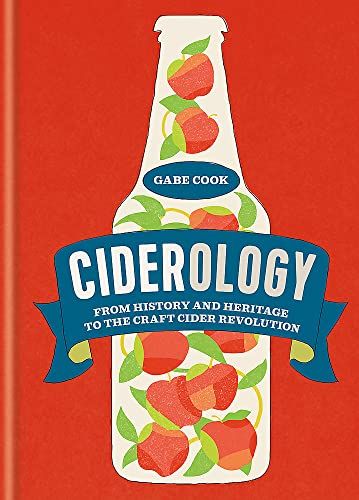
Read more information is this wonderful book dedicated to cider.
In Ciderology, Gabe Cook, aka ‘The Ciderologist,’ leading global cider expert, shares his passion for all things cider (and perry!), with an essential history of the drink and production processes, and a round-the-world tour of the most important and exciting cider makers in operation.